July 19, 2025 by Ewell Smith
Ted Patestos shares how Tiger Adjusters is helping homeowners win insurance battles - and turning it into a franchise.
When disaster strikes, most people expect their insurance company to have their back - but that’s not always the case. In this episode of Close The Deal, Tiger Adjusters CEO Ted Patestos reveals how his franchise helps homeowners and business owners fight back - and how he’s turning that mission into a powerful, scalable franchise.
Ted Patestos' 10 Close The Deal Mindset Success Quotes
- "You can be a chuck in a truck and make $750K—but that breeds complacency. We chose to build something scalable."
- "Over 90% of our claims result in supplemental payments. That’s money back in homeowners’ pockets."
- "This business runs off a laptop and a phone. No buildout, no storefront, just results."
- "Franchising wasn’t about ego—it was about making a real impact, nationwide."
- "You might start with a $10K check. We get you to $75K. That changes lives."
- "It’s not about getting every dollar. It’s about getting the best possible outcome for the client."
- "Our Philadelphia franchisee did $861K in his first year—and cleared $655K net."
- "When the insurance carrier says 'we’re done,' we ask: what’s the right call for the homeowner?"
- "We’re co-payees on the insurance check. That means no chasing money, no accounts receivable drama."
- "Focus on fundamentals: low overhead, strong systems, and helping people when they need it most."
Interested in Tiger Adjuster, contact Ewell HERE.
Close The Deal Podcast Player
Close The Deal Podcast - Franchise Profits
Ted Patestos - Tiger Adjusters
How Tiger Adjusters is Franchising Insurance Advocacy
What is a Public Adjuster—and Why Should You Care?
If you've ever had to fight with your insurance company after storm damage or a home disaster, you're not alone. Many homeowners end up frustrated, underpaid, and confused by the claims process. That’s where public adjusters come in—and why Tiger Adjusters is turning this overlooked profession into a franchise opportunity.
From Corporate to Claims Advocacy
Ted Patestos, CEO of Tiger Adjusters, didn’t set out to become a public adjuster. He came from the lead generation and marketing tech world. But after collaborating with contractors and public adjusters during the pandemic, he saw the gaps in the insurance claim process—and the enormous potential in solving them.
After accidentally taking the wrong insurance licensing exam and working for Allstate for a month, he got a firsthand look at how things worked (and didn’t work) from the inside. Once licensed correctly, he and his partner hit the road and began helping property owners get the insurance payouts they deserved.
How the Tiger Adjusters Model Works
Public adjusters represent homeowners or business owners—not the insurance company. They step in after a claim is filed to advocate for a fair settlement. That might mean taking the insurance company’s $7,000 offer and pushing it to $60,000, $100,000, or more.
Tiger Adjusters uses the same industry-standard software as the carriers, so they speak the same language—but from the policyholder’s side. And crucially, they don't just come in at the beginning. Even if you’ve already accepted a check, a public adjuster can reopen the claim and fight for what you're actually owed—up to 12 months later.
The Market Gap—and Why Franchising Works
Most people don’t even know what a public adjuster is. That’s one of the major advantages of the Tiger Adjusters franchise model: it’s solving an urgent problem most homeowners and business owners don't even realize they have—until it’s too late.
The business has historically attracted "chucks in a truck" who can pull in significant income but often lack systems, branding, or scale. That’s where Tiger Adjusters stands out: it's the first company to turn this into a replicable, branded franchise model.
Client Experience: Advocacy in Action
For customers, the process starts with frustration—maybe months of delay or a lowball offer from their insurance carrier. Tiger Adjusters steps in to document the loss, inspect the damage, and negotiate directly with the carrier. Whether it’s for your home, your business, or inventory that’s spoiled due to power outages, Tiger Adjusters fights for the best possible outcome.
The average claim payout through Tiger Adjusters is about $51,000. Clients see massive increases—sometimes going from $10,000 to $75,000 or more—thanks to meticulous documentation, industry knowledge, and negotiation.
Commercial Claims & Business Interruption
It’s not just about homes. Tiger Adjusters also handles business interruption claims for companies that suffer operational losses. That includes inventory spoilage, extra expenses like emergency storage or equipment rental, and revenue loss.
For example, a seafood facility that loses power could have hundreds of thousands in damages. Tiger Adjusters helps them recover not just the cost of inventory, but the lost revenue and removal costs too.
The Franchise Opportunity
Tiger Adjusters is a paper-based, home-based business. Most of the work is done from a laptop and a phone. There’s no required storefront, no labor-heavy crews, and low overhead. It’s ideal for owner-operators, though it can also scale with the addition of fee-based contractors like field inspectors.
Startup costs in the FDD range from about $43K to $159K, depending on optional items like vehicles or office space. Most franchisees start lean, working from home and outsourcing when needed.
In 2024, the Philadelphia franchisee pulled in $861K in revenue and cleared over $655K in profit—all cash-based, not just accrual. That kind of margin is rare in franchising, especially with no accounts receivable risk (franchisees are co-payees on insurance checks).
Scaling Without the Stress
Unlike restoration or roofing companies, Tiger Adjusters doesn’t rely on large crews or heavy inventory. All team members are 1099, fee-for-service only—meaning you only incur labor costs once you’ve secured revenue. This makes scaling smarter, safer, and easier.
With three territories covering 1.5M people, the Philadelphia operator has proven the model scales efficiently without ballooning overhead.
Advice for Aspiring Franchisees
Ted’s advice is simple: focus on fundamentals. Not every month will be big, but if your costs stay low and your acquisition cost is minimal, the upside is huge. A month with just 10 claims might still mean $25K in revenue—but with only $3K in overhead.
Forget the flashy vehicles or fancy offices. The real value is in smart operations, customer advocacy, and a system designed to grow.
Final Thoughts
Tiger Adjusters offers more than a business. It’s a mission-driven opportunity to help people when they need it most. If you’ve ever felt burned by an insurance company—or want to build a business where you truly make a difference—this franchise is worth a closer look.
To learn more, visit YourFirstFranchise.com and grab your free copy of Your First Franchise Roadmap.
Subscribe



Laid off?
Not valued?
Ready to exit?
Discovered ageism
is real?
Be The Boss.
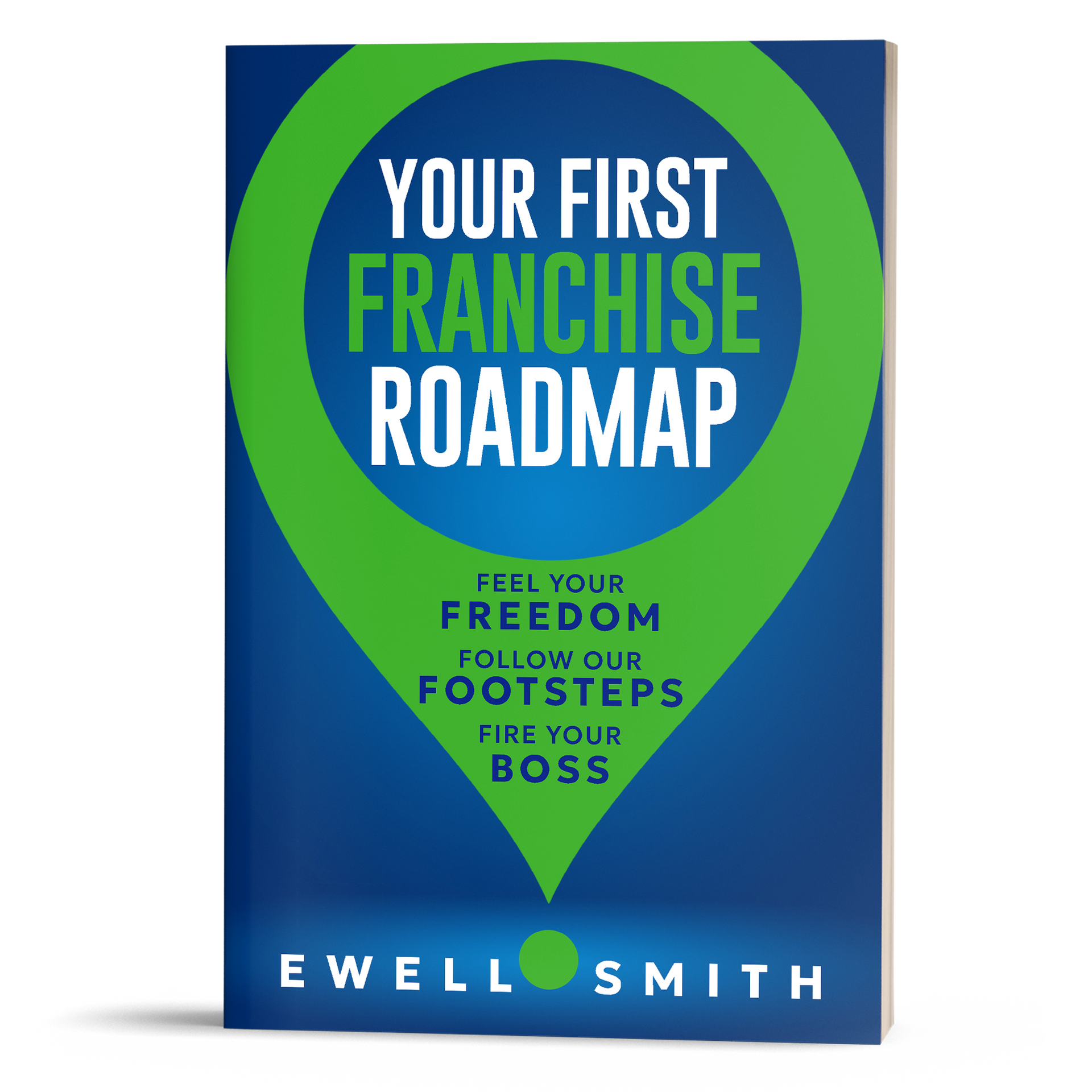
Close The Deal on
Your First Franchise
Claim Your Free Copy

About the Author Ewell Smith is the publisher of CloseTheDeal.com, host of the Close The Deal Podcast, and author of Your First Franchise Roadmap and Pink Slip Comeback