If you are running a business, leading a sales team, or evaluating an opportunity, there is one question that matters more than almost any other.
Are your sales actually turning into profit?
That is exactly what return on sales helps you understand.
Return on sales is not complicated. It does not require advanced accounting knowledge. It simply shows how efficiently a business converts revenue into operating profit.
What Is Return on Sales
Return on sales measures how much operating profit a business keeps from its total sales.
It focuses on day to day operations. It does not factor in taxes, interest, or financing decisions.
In plain terms, return on sales tells you how much money stays in the business after normal operating expenses are paid.
A higher return on sales means the business is operating more efficiently.
Formula for Return on Sales
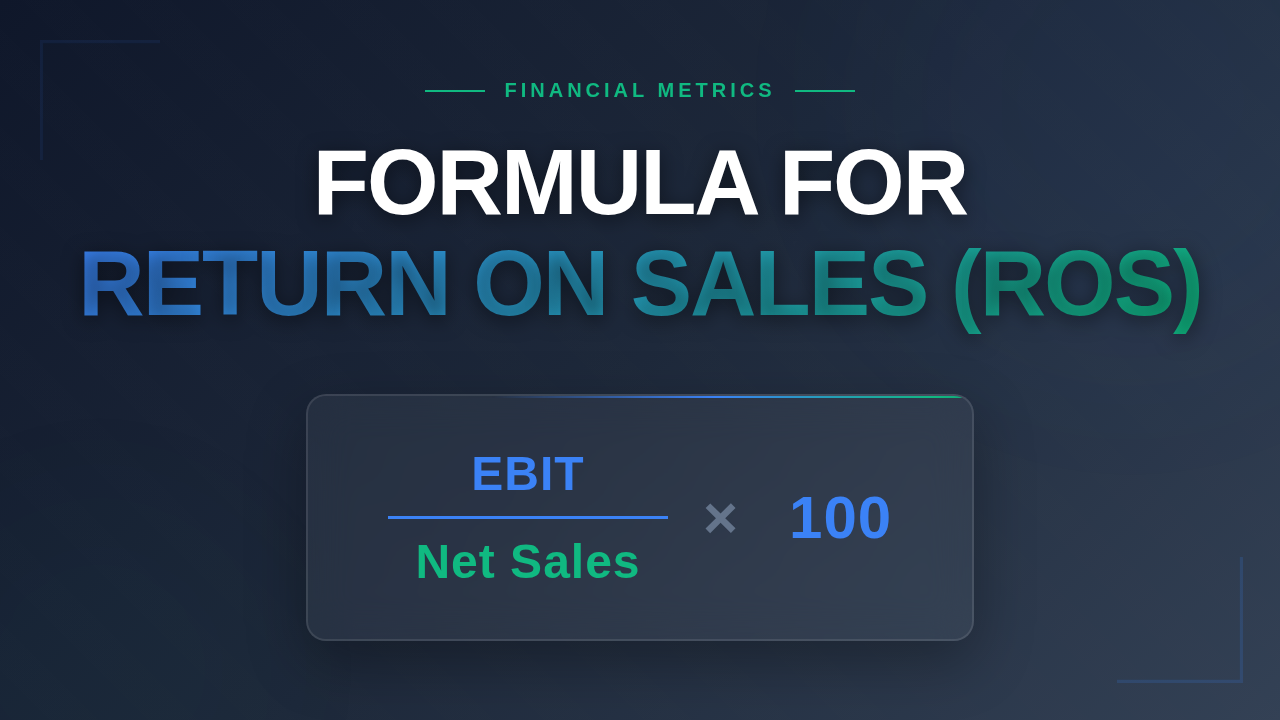
The formula for return on sales is:
Return on Sales = (Operating Profit ÷ Net Sales) × 100
Operating profit is what remains after subtracting operating expenses such as payroll, rent, marketing, utilities, and materials. It is often referred to as EBIT, earnings before interest and taxes.
Net sales represent the revenue the business actually keeps after adjustments.
The result is a percentage.
If return on sales is 15 percent, the business keeps 15 cents for every dollar sold before taxes and debt.
Net Sales vs Gross Sales (This Matters)
Return on sales is calculated using net sales, not gross sales.
Net sales reflect the revenue the business actually keeps after returns, discounts, and allowances. Gross sales can overstate performance and make margins appear stronger than they truly are.
Net sales are calculated as:
Net Sales = Gross Sales minus Returns minus Discounts minus Allowances
Using net sales provides a more accurate picture of operating efficiency and allows for clean comparisons over time and across businesses.
In many small businesses, gross sales and net sales may look almost identical. But technically and correctly, return on sales is always based on net sales.
If your income statement lists net revenue or net sales, that is the number to use.
EBIT vs EBITDA: What’s the Difference
Return on sales is based on operating profit, also known as EBIT. This is where many people get confused, especially when EBITDA is often discussed in valuation and cash flow conversations.
EBIT stands for earnings before interest and taxes. It reflects profit generated from normal business operations after operating expenses are accounted for.
EBITDA goes one step further by adding back depreciation and amortization. These are non cash accounting charges related to assets and intangible investments.
Why Return on Sales Is Important
Return on sales helps you see whether growth is healthy or dangerous.
A business can grow revenue and still struggle if margins are shrinking. Higher sales alone do not guarantee better performance.
Tracking return on sales helps identify pricing issues, rising costs, and inefficiencies before they become serious problems.
It is especially useful when comparing performance over time or evaluating similar businesses within the same industry.
Three Real World Return on Sales Examples
Local Coffee Shop (Retail Model)
A neighborhood coffee shop with steady customer traffic.
Net Sales
$500,000 per year
Operating Profit
$50,000 per year
Return on Sales
($50,000 ÷ $500,000) × 100 = 10 percent
This means the business keeps ten cents of operating profit for every dollar sold.
In food and beverage retail, return on sales between 5 and 10 percent is common. Improvements usually come from reducing waste, adjusting pricing, or selling higher margin items.
Freelance Graphic Designer (Service Model)
A solo designer working independently.
Net Sales
$100,000 per year
Operating Profit
$70,000 per year
Return on Sales
($70,000 ÷ $100,000) × 100 = 70 percent
Service businesses often produce higher return on sales because they have low overhead and minimal inventory.
When return on sales declines in this model, the issue is usually underpricing, excessive revisions, or inefficient use of time.
Software Company (Scalable Model)
A small software company selling subscriptions online.
Net Sales
$1,000,000 per year
Operating Profit
$400,000 per year
Return on Sales
($400,000 ÷ $1,000,000) × 100 = 40 percent
Software businesses can achieve strong return on sales once the product is built because additional customers add little incremental cost.
In this model, return on sales often improves as the company scales. Lower margins typically indicate excessive marketing spend or bloated development costs.
How to Use Return on Sales in Your Business
Start by pulling operating profit and net sales from your income statement.
Calculate return on sales monthly or quarterly.
Then ask a few simple questions.
Are margins improving or shrinking over time?
Are higher sales actually improving profitability?
Where can costs be reduced without harming growth?
There is no universal benchmark for return on sales. What matters is understanding your number, tracking the trend, and comparing it to similar businesses.
Return on sales does not replace other financial metrics, but it is one of the fastest ways to understand whether sales are truly working for you or just keeping you busy
Frequently Asked Questions About Return on Sales